Invoicing
How to Track Client Billing and Invoices: The Two Failures That Quietly Cost the Most
There are only two ways billing goes wrong, and neither is dramatic. Work gets delivered and never invoiced. Or an invoice gets sent, isn't paid, and nobody follows up. Both are tracking failures, and both are quietly expensive.
The two failures: never sent, and sent but never chased
Unbilled work is the one freelancers underestimate, because it leaves no trace: there's no overdue invoice to notice, just revenue that never existed. It happens most on retainers and long projects, where the trigger to invoice is a date rather than a delivery, and on small extras done between milestones. The second failure is better documented: 29% of freelance invoices are paid at least a day late, and invoices over $20,000 are three times more likely to be paid late than invoices under $100 (full sourcing on the statistics page). Late payment is normal, and a system that treats it as an exception will keep being surprised by it. Assume a share of every month's invoices will need chasing, and build the chase into the process rather than into your memory.
Give every invoice a status, not a folder
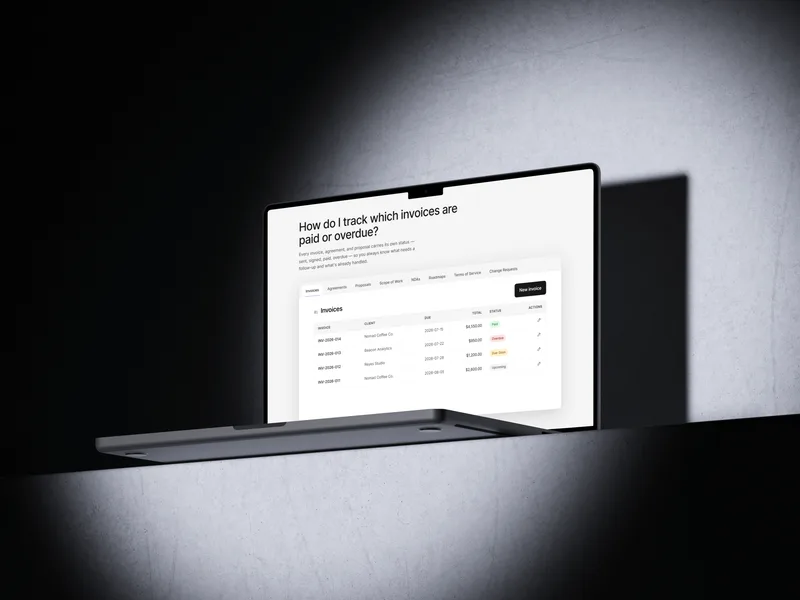
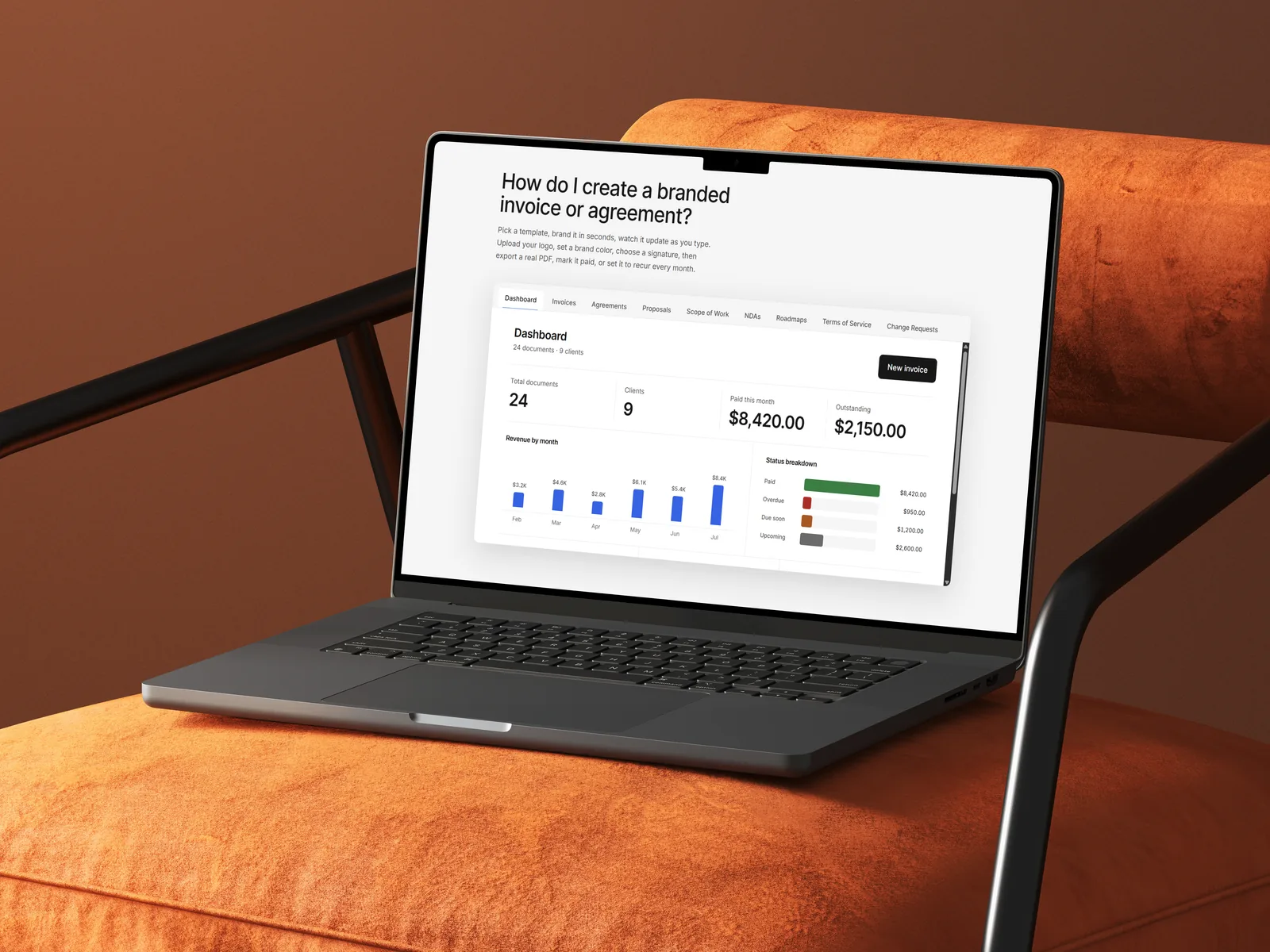
Filing invoices by client or by month tells you where a document is, not what you should do about it. Status does. Five states cover the whole lifecycle, and each one implies a specific next action, which is the point, because the system's job is to tell you what to do today without you rereading anything.
| Status | What it means | Next action |
|---|---|---|
| Draft | Work delivered, invoice not yet sent | Send it, or find out what's blocking it |
| Sent | Issued, still within terms | Nothing until the due date |
| Due today | Payment term expires today | Short reminder with invoice number and amount |
| Overdue | Past the due date, unpaid | Follow up on a fixed cadence, escalating |
| Paid | Funds received and reconciled | Close it; check nothing else is open for that client |
A billing cadence you can actually keep
Pick a fixed billing day and invoice everything billable on it, rather than invoicing whenever a piece of work happens to finish. Ad-hoc invoicing feels responsive but is the main cause of unbilled work, because it depends on you noticing the moment. A fixed day (the 1st and 15th, or every Friday) turns billing into a recurring task that either happened or didn't. Retainers should be recurring invoices set up once, not remembered monthly. Milestone billing should be triggered by the milestone's sign-off in your project tracker, so the invoice is created when the work is accepted rather than the next time you think about money. And when a change request is approved, invoice it on the same schedule as everything else instead of holding it to the end of the project, where it's easiest to forget.
Reconcile against the bank, not against memory
Marking an invoice paid because you remember seeing a payment is how invoices get closed twice and how partial payments go unnoticed. Once a month, take the list of invoices you believe are paid and check them against actual deposits, matching exact amounts rather than approximate ones. Partial payments are the specific thing this catches: a client paying $2,000 against a $2,400 invoice reads as "they paid" in memory and as $400 still outstanding in reality. This pass is also where you'll find duplicate invoice numbers, missing payment references, and invoices marked sent that were never actually sent. Twenty minutes a month, and it's the only step here that verifies the rest of the system is telling you the truth.
Frequently asked questions
- How often should freelancers invoice clients?
- For ongoing work, monthly or twice-monthly on a fixed date is the usual balance between cash flow and admin overhead. For project work, invoice at agreed milestones rather than at the end. It shortens the gap between doing work and being paid for it, and it limits how much unpaid work is exposed if the project stalls.
- Should I use invoicing software or a spreadsheet?
- A spreadsheet works while you can hold the whole picture in one view. It breaks when you need invoices linked to clients, statuses that update, and recurring invoices that issue themselves. If you're regularly asking "did I send that one?", the spreadsheet has already stopped doing its job.
- What's the difference between billing and invoicing?
- Billing is the whole process of deciding what a client owes and when to ask for it: rates, cycles, milestones, retainers. An invoice is the individual document that requests one specific payment. Most tracking failures are billing failures rather than invoicing ones: the invoice was fine, it just never got created.