Invoicing
What Information Should I Include on My Freelance Invoice? (14-Point Checklist)
An invoice missing a field doesn't get rejected. It gets set aside, which is worse, because nobody tells you. Most avoidable payment delays trace back to a document that couldn't be processed as-is by whoever received it.
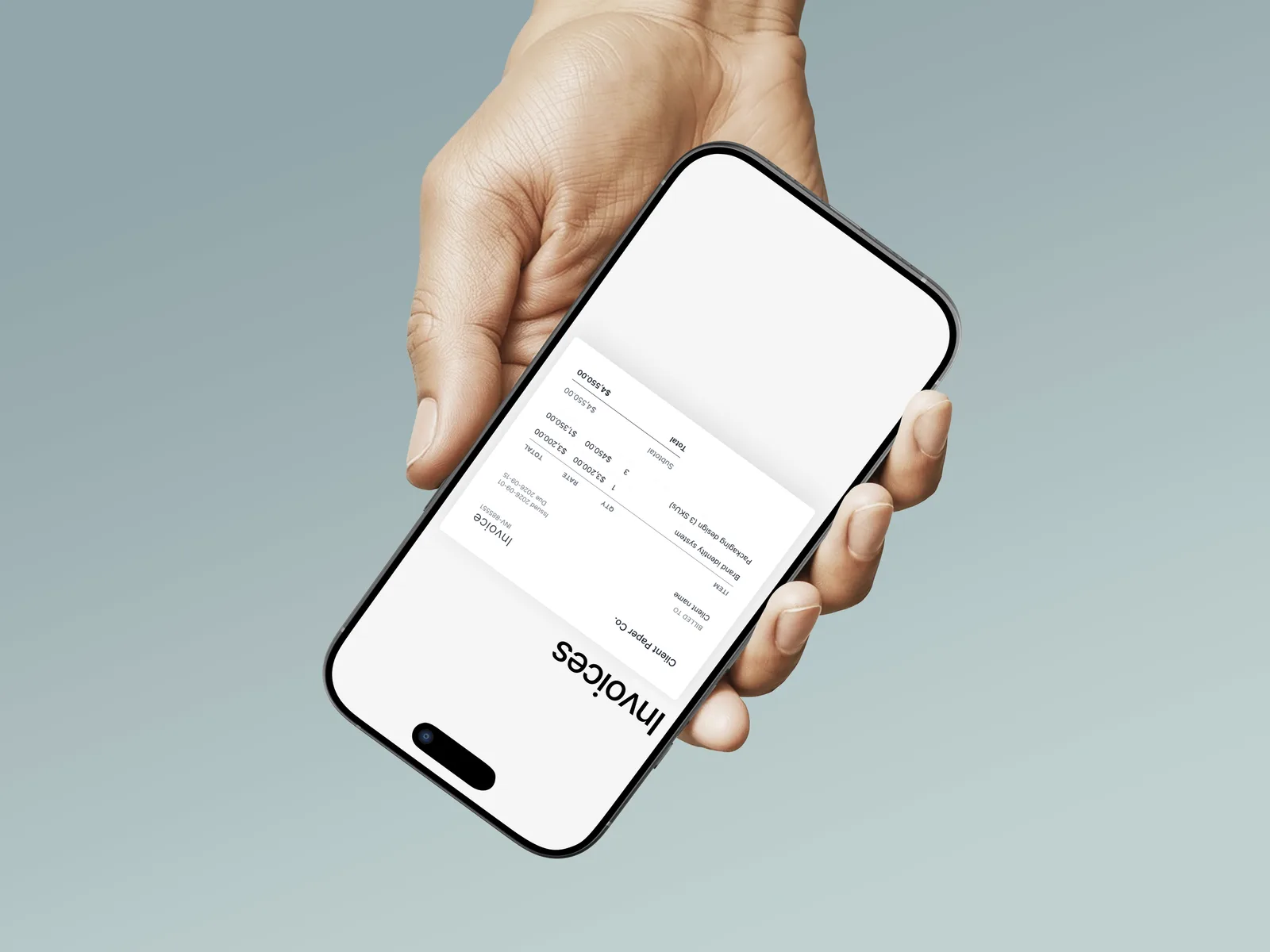
The eight fields that make an invoice valid
These are what an accounts payable team needs before they can enter your invoice into a system at all. Missing any one of them means someone has to email you and wait, which usually costs more time than the payment terms themselves.
| # | Field | Why it's required |
|---|---|---|
| 1 | The word "Invoice" | Distinguishes it from a quote, proposal, or receipt in a filing system |
| 2 | Unique invoice number | The reference both sides use; duplicates cause payments to be matched wrongly |
| 3 | Your name or business name and address | Identifies who is owed and who to pay |
| 4 | Client's legal name and billing address | A trading name that doesn't match their registered entity can stall approval |
| 5 | Invoice date | Starts the payment-term clock |
| 6 | Itemised description of work | What's being paid for, in enough detail to approve without a call |
| 7 | Amount per line, subtotal, and total | The number that gets paid, and how it was arrived at |
| 8 | Payment due date | An invoice with no due date has no reason to be prioritised |
Six more that get it paid faster
The second set isn't strictly required, but each one removes a specific reason a payment stalls. Payment terms stated in words ("Net 15") make the due date unambiguous rather than something the client calculates. Full bank or payment details, including whatever reference format your bank needs, removes a round trip. A purchase order or reference number, where the client uses them, is often what their system matches against; an invoice without it can sit unmatched indefinitely. The billing contact's name, where it differs from your day-to-day contact, gets it to the right desk. A late fee or interest clause, stated up front, gives your reminder something to point at. And a short note tying the payment to the project, "Milestone 2 of 4, per scope of work dated 3 August", lets an approver confirm it without opening anything else.
Tax fields: what changes by country
Tax is where invoice requirements stop being universal, and it's worth confirming your own rather than copying a template's defaults. In the EU and UK, a VAT-registered freelancer must show their VAT number, the rate applied, the tax amount as a separate line, and the client's VAT number for cross-border business supplies. In India, GST invoices require your GSTIN, the client's GSTIN for business customers, an HSN or SAC code for the service, and CGST/SGST or IGST split out depending on whether the supply is intra-state. In the US there's no equivalent invoice-level tax field for most freelance services, but clients typically need a completed W-9 on file before they can pay you, and will issue a 1099 above the reporting threshold. If you're not registered for a given tax, don't show a tax line at all. An invoice charging tax you aren't registered to collect is a real problem, not a formatting one. Thresholds and rules change; confirm yours with a local accountant.
What to leave off
An invoice is a payment document, not a summary of the relationship. Leave out project narrative, status updates, and anything that reads as negotiation. Those belong in the covering email or a status report, and putting them on the invoice gives an approver something to question. Leave out hours-by-day breakdowns unless your contract requires them; itemising by deliverable or milestone is easier to approve than a timesheet, which invites line-by-line scrutiny. Don't restate full contract terms; reference the agreement by date instead. And never include a tax number or registration you don't hold, or a bank account in a name that doesn't match the invoicing entity: that mismatch is one of the few things that gets an invoice genuinely rejected rather than merely delayed.
Frequently asked questions
- Does a freelance invoice need to be a PDF?
- It doesn't legally have to be, but PDF is what most accounts payable teams expect and can file. An invoice pasted into an email body is easier to lose and harder to forward internally. Send the PDF as an attachment, with the invoice number and amount in the subject line.
- What invoice numbering format should I use?
- Any sequential format that never repeats across your whole business: INV-2026-001, or a running number from 1001. Don't restart numbering per client; overlapping numbers make payments hard to match and look disorganised to a finance team. Decide the format before your first invoice, since changing it mid-relationship causes confusion.
- Do I need to include my address on an invoice?
- Yes, in almost all cases. It identifies the invoicing entity and is often required for the client's own records and tax reporting. If you work from home and would rather not publish your home address, a registered business address or a mail-forwarding address is the usual solution.