Invoicing
How to Know Which Clients Haven't Paid You Yet (Nonpayment Costs the Average Freelancer $6,000 a Year)
Most freelancers can name the invoice they're worried about. Far fewer can say, without checking, how much is outstanding across every client and how old the oldest piece of it is, and that second number is the one that predicts a bad quarter.
The number you need is outstanding by client, not by invoice
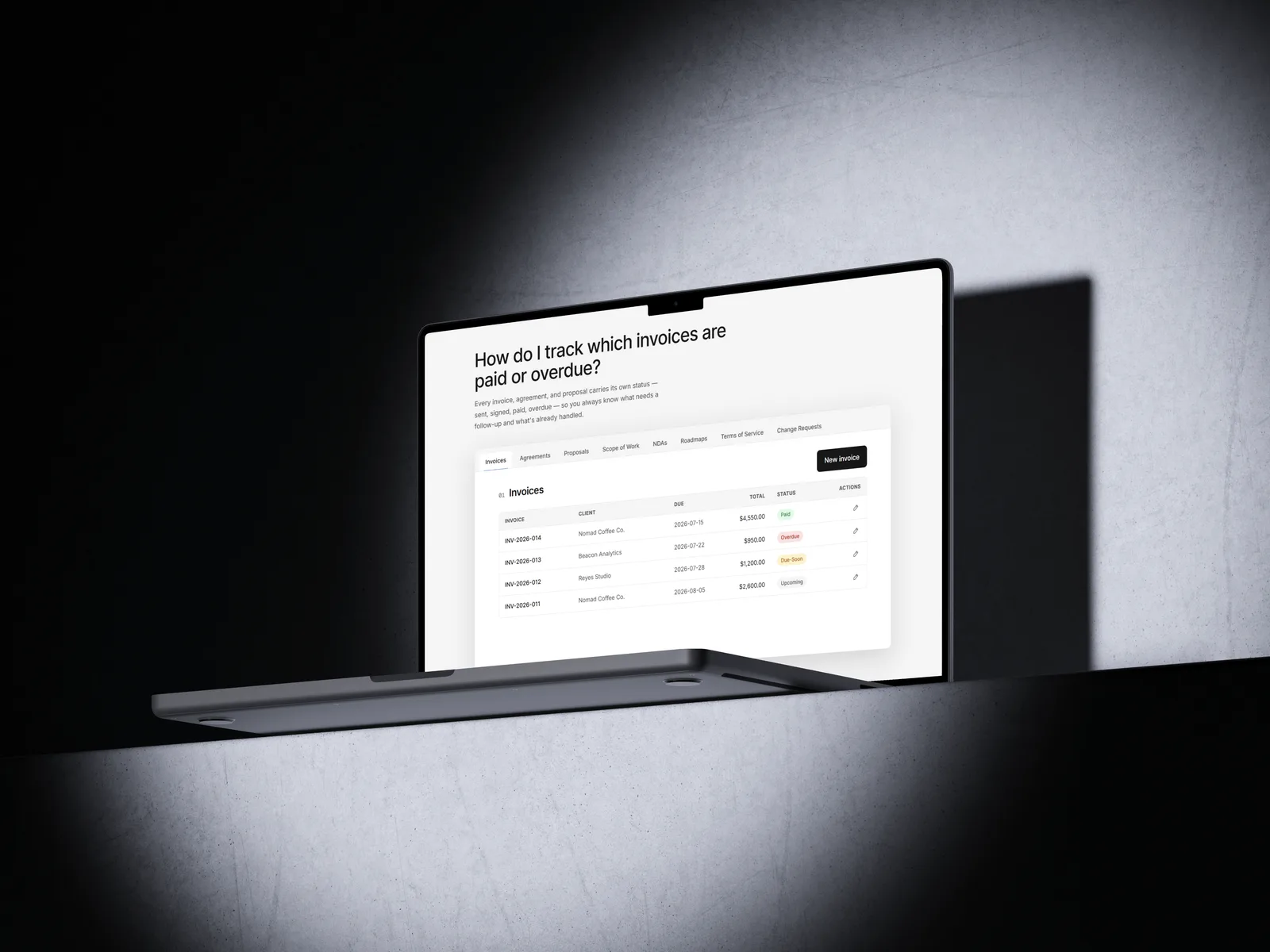
An invoice list sorted by date tells you which documents are late. It doesn't tell you which relationships are in trouble, and that's the more useful signal. A client with three invoices each two weeks late is a different situation from a client with one invoice ninety days late, even when the totals match: the first is a slow accounts payable process, the second is a client who has stopped paying. Rolling invoices up per client gives you one number per relationship and one decision per client, instead of a list of documents you triage individually. It also surfaces the case pure invoice views hide: a client whose individual invoices are each only slightly late but who is permanently carrying a large balance you've stopped noticing.
Build an aging view: 0-30, 31-60, 61-90, 90+
Aging buckets are standard accounting practice for a reason: the age of a debt predicts recovery better than its size does. Group each client's outstanding balance by how many days past due it is, and let the bucket dictate the action rather than deciding case by case, which is how awkward conversations get postponed indefinitely. The escalation should be fixed and slightly uncomfortable by design: each step assumes less goodwill than the last.
| Bucket | Likely cause | Action |
|---|---|---|
| 0-30 days | Normal accounts payable delay | Friendly reminder on the due date, another at day 7 |
| 31-60 days | Invoice lost, disputed, or deprioritised | Phone or direct contact; confirm they have it and it's approved |
| 61-90 days | Real payment problem or unresolved dispute | Formal written notice with a new deadline; pause new work |
| 90+ days | Meaningful risk of nonpayment | Final demand, then collections or small claims; stop all work |
Set the overdue trigger before the invoice is late
The reason overdue invoices go unnoticed isn't that freelancers don't care. It's that noticing requires an action on a day when nothing prompts it. Fix that at the moment you send the invoice, not afterwards: the due date goes on the invoice, and reminders are scheduled for the due date and for a week after, before you close the tab. Tools that track invoice status can do this by flipping an invoice to overdue and surfacing it; if you're doing it manually, a calendar entry per invoice is the low-tech equivalent and works. The important property is that the prompt exists independently of you remembering the client. Nonpayment costs the average affected freelancer around $6,000 a year, roughly 13% of income, and 71% have struggled to collect at least once (sources on the statistics page), and those losses concentrate in invoices nobody was actively watching.
When to stop work, and how to say it
Continuing to deliver while an invoice ages is how a manageable amount becomes an unrecoverable one, and it spends the only real leverage you have. Set the threshold in advance: a common one is pausing new work once anything passes 30 days overdue, so the decision isn't made emotionally in the moment. Then say it plainly and without hostility, because the goal is payment, not a point: "Invoice INV-2026-031 is now 34 days past due. I'll pause work on the current milestone until it clears, and pick straight back up once it does." State the invoice number, the age, what you're pausing, and what resumes it. Most of the time this is enough, because it moves your invoice out of a queue nobody is looking at and onto the desk of a person who now has a reason to look.
Frequently asked questions
- How long should I wait before chasing an unpaid invoice?
- Send a short reminder on the due date itself. Most late payments at that stage are processing delays, not disputes. Follow up around day 7, then weekly. Waiting a month before the first contact makes the conversation harder for both sides, because the silence itself becomes something to explain.
- Can I charge late fees on an unpaid freelance invoice?
- Only if your contract or invoice states the fee before the work begins, and the amount is within what local law allows. A common structure is a small percentage per month past due. Its main value is leverage in the reminder rather than income: many freelancers reference it and then waive it once payment arrives.
- When is an invoice too old to recover?
- There's no fixed cutoff, but recovery rates drop sharply past 90 days, and legal claim deadlines vary by jurisdiction. Treat 90 days as the point to move from reminders to a formal demand and a decision about collections or small claims, rather than continuing an indefinite reminder cycle.